
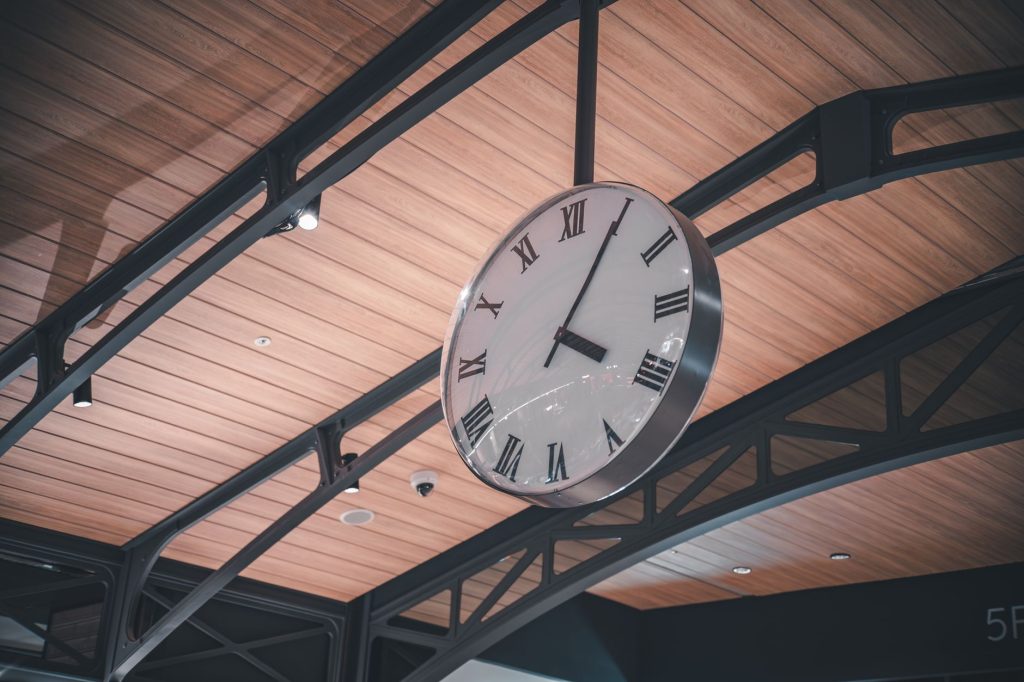
You're writing an email and want to say you'll call "this afternoon" or "this evening," and your plan is 5pm. Which one fits? Most people land in the same place, but the honest answer to is 5pm evening or afternoon is that it sits right on the border, and the safest choice depends on who you're talking to.
The short answer
In everyday English, 5pm is usually still the afternoon. A lot of people treat noon to 5pm as afternoon and 5pm to around 9pm as evening, so 5pm is the hinge where one turns into the other. If you say "late afternoon" for 5pm, nobody will blink. If you say "early evening," most people will also nod along.
So both are acceptable. The trick is knowing which one sounds more natural in a given sentence.
Why the line moves
There's no official clock rule for this. The words come from daily life, not from a standards body, and daily life changes with the seasons and with work.
Think about winter in London or New York. By 5pm it's dark, offices are emptying, and people start saying "good evening" at the shop counter. In June, the same 5pm feels like a bright afternoon, with hours of daylight left. The time on the clock didn't change, but how it feels did.
Work habits matter too. For someone on a 9-to-5 job, 5pm is the end of the working day, and anything after that feels like their evening. For a student whose classes end at 3pm, 5pm may feel like the middle of a long afternoon.
Greetings at 5pm
If you're walking into a meeting at 5pm, "good afternoon" is the more common choice in offices. "Good evening" can sound a bit formal or slightly early unless it's already dark outside. A receptionist at a hotel might switch to "good evening" around 5 or 6, and that's fine too.
A simple rule: if the sun's still up and people are still at work, stick with afternoon.
Scheduling without mix-ups
This is where the wording really matters. If you write "let's talk this evening," one person might expect 5:30 while another assumes 8pm after dinner. That gap can cause a missed call.
For anything that matters, add the number. "Let's talk this afternoon at 5" or "this evening around 5:30" removes the guesswork. It's a small habit that saves a lot of awkward follow-up messages.
Here's a real example. A manager tells her team the report is due "by end of afternoon." Half the team sends it at 3pm, the other half at 5:45pm. Nobody was wrong, the phrase was just loose. "Due at 5pm" would've done the job.
Other languages and cultures
Not every language splits the day the same way. Spanish speakers often use "tarde" for both afternoon and early evening, so 5pm and 7pm can both be "la tarde." Italian has "pomeriggio" for afternoon and "sera" for evening, with the switch often coming later than in English. If you're talking across languages, the number on the clock is your friend.
If you like digging into small word questions like this, compairro.com covers plenty of them, from spelling pairs to time phrases.
Quick guide
Noon to about 5pm: afternoon.
Around 5pm: either, with "late afternoon" or "early evening" both sounding natural.
About 6pm to 9pm: evening.
After 9pm: night, for most people.
A note for international teams
If you work with people in other time zones, "this afternoon" gets even trickier. Your 5pm might be someone else's breakfast. Writing the time with the zone, like "5pm GMT," saves a lot of back-and-forth.
So what should you say?
If you want the version that fewest people would argue with, call 5pm late afternoon. If it's winter, dark and the workday's over, early evening sounds right too. And when the exact time matters, just say "5pm." It's clear, it's short, and nobody has to guess what you meant.

